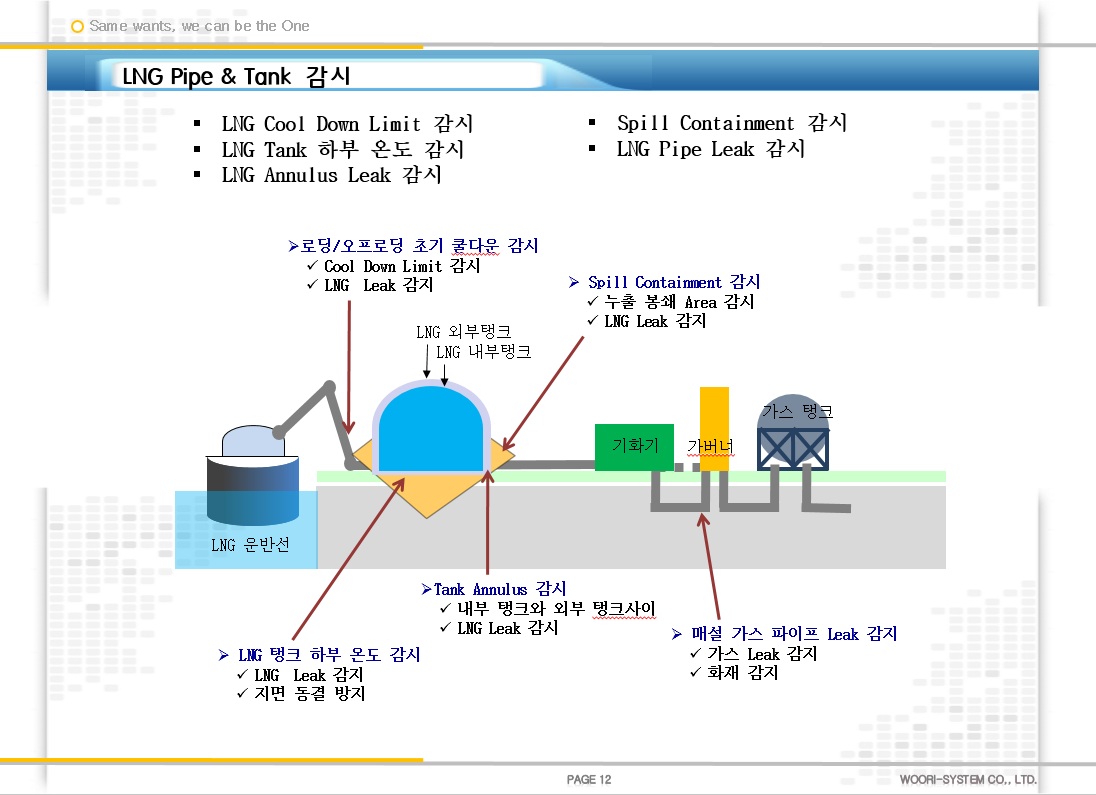
A DTS system can effectively monitor LNG tanks and pipelines through temperature measurement. Using DTS with fiber optic sensing cables provides the following advantages.
1. Sensors require no electrical power. The sensing element is an optical cable measured with laser pulses, providing a suitable sensing method for explosion-hazard areas. The sensing and signal transmission functions share one optical cable, so no electrical power supply is needed at the monitored equipment.
2. Continuous coverage without blind spots. Unlike point sensors or cameras, a distributed fiber optic system monitors every part of the installed cable at intervals of one meter or less, 24 hours a day.
3. Advantages over large areas. DTS equipment can cover distances from at least 2 km to tens of kilometers, and sensing cables cost much less than many other sensor arrangements. As the monitored area increases, the system can provide a simpler, more economical configuration.
LNG applications include cooldown limit monitoring, temperatures beneath LNG tanks, annulus leak detection, spill containment monitoring, and leak detection along buried or above-ground pipelines. Please refer to the accompanying illustration for the monitoring concept.

이메일 무단수집을 거부합니다.
본 웹사이트에 게시된 이메일 주소가 전자우편 수집 프로그램이나 그 밖의 기술적 장치를 이용하여 무단으로 수집되는 것을 거부하며, 이를 위반시 정보통신망법에 의해 형사 처벌됨을 유념하시기 바랍니다.